

Do You Need a Permit to Build a Deck in Minnesota?
The Role of the Minnesota State Building Code
Decks across the state fall under the Minnesota State Building Code, which establishes the minimum standards for safety and durability. While these rules are set at the state level, enforcement and interpretation happen locally. Whether you live in Minneapolis, St. Paul, Bloomington, or smaller communities like Maple Grove and Eden Prairie, your local building department will have the final say on permits, inspections, and approvals.
Local control means that requirements can vary slightly from town to town, making it essential to understand the specific rules governing your neighborhood.
When a Permit is Non-Negotiable
Several specific factors will automatically trigger the need for a building permit in Minnesota. Understanding these “triggers” can help you plan your project accurately.
- Attached Decks: If a deck is attached to your home, it is legally considered an extension of the building structure. The “ledger board”—the point where the deck meets the house—must be installed perfectly to prevent water intrusion and rot. Because improper ledger installation is a leading cause of deck collapses nationwide, Minnesota authorities strictly require permits and inspections for these connections.
- Deck Height: Height is a major safety factor. Any deck that is more than 30 inches above ground level at any point requires a permit. Elevated decks carry a higher risk of injury from falls, necessitating specific guardrail designs, stair specifications, and structural supports.
- Safety-Critical Elements: Homeowners often think permits only apply to the main platform, but stairs and railings are considered safety-critical elements. Their spacing, load capacity, and dimensions are strictly controlled by the building code.
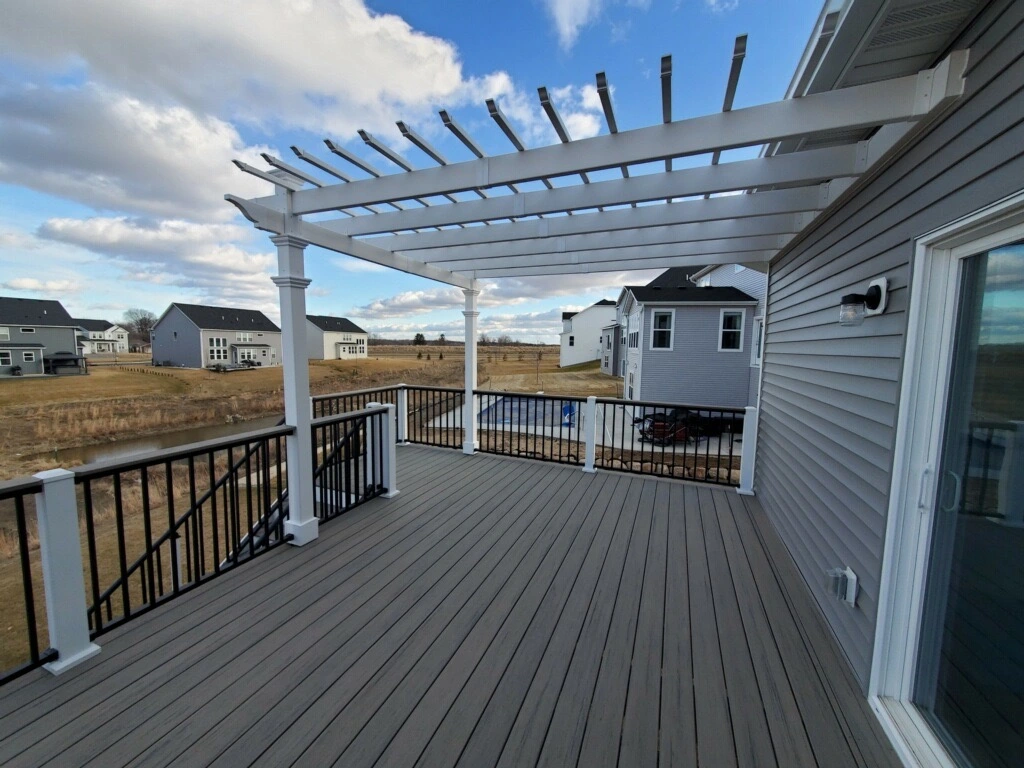
- Added Complexity: If your deck design includes a pergola, a roof, or a privacy wall, the added weight and structural complexity almost guarantee that formal approval and a permit will be required.
The "Small Deck" Misconception
A common myth among homeowners is that small or freestanding decks never require permits. While some very low, freestanding decks might be exempt from a building permit, they are rarely exempt from zoning controls.
Zoning guidelines determine how close a deck can be to property lines, alleys, and sidewalks. These “setback requirements” are often the “quiet killer” of a project, especially in older, more developed neighborhoods where space is limited. Furthermore, Minnesota’s topography adds another layer of regulation; if your property is near a lake, river, or wetland, you may face additional limitations designed to protect natural resources and manage drainage.
The Dangers of Building Without a Permit
Skipping the permit process might seem like a way to save time and money, but the long-term risks are significant.
- Legal Action: You may face stop-work orders, heavy fines, or be forced to modify or even tear down the completed structure.
- Selling Your Home: Illegal construction is a major red flag during the home inspection process. If you try to sell or refinance your home, an unpermitted deck can delay the sale or force you to complete costly “after-the-fact” permitting.
- Insurance Failures: If a deck collapses or someone is injured, insurance companies may refuse to cover the claim if the structure was not approved or inspected.
Permits for Renovations and Renewals
It is a common mistake to assume permits are only for entirely new builds. If you are performing a deck renewal that involves structural changes—such as adding new footings, replacing stairs, or changing load-bearing beams—you likely still need a permit.
However, “superficial” enhancements typically do not require formal paperwork. This includes:
- Replacing old deck boards with new ones (without changing the frame).
- Applying new stains or protective layers.
- General cleaning and maintenance.
The Minnesota Climate Factor
The reason for such strict rules is the Minnesota climate. To prevent the deck from shifting, footings must be deep enough to sit below the frost line. Additionally, the structure must be engineered to withstand the weight of heavy snowfall without sagging. Materials must also be selected and installed to eliminate the constant threat of rot caused by moisture exposure.